
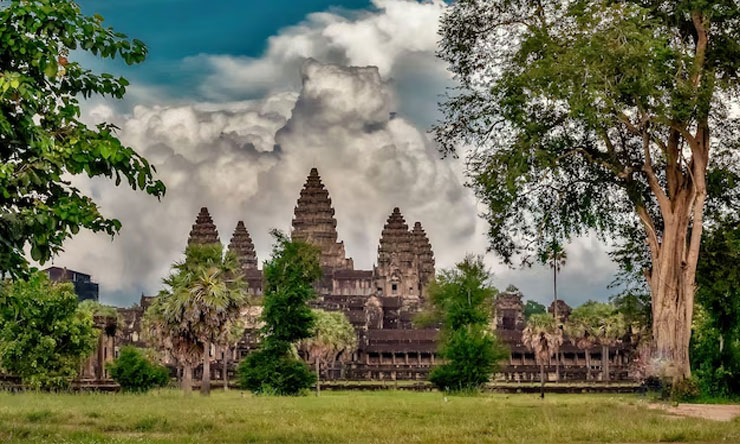
Angkor Wat stands as one of the most magnificent cultural and architectural achievements in human history. Located in northwestern Cambodia, this iconic temple complex is not only a symbol of national pride but also a profound representation of spiritual devotion and artistic excellence. Angkor Wat has become a global destination for travelers seeking to immerse themselves in history, religion, and culture within a single extraordinary setting.
Constructed in the early 12th century, Angkor Wat was originally dedicated to the Hindu god Vishnu before gradually transforming into a Buddhist temple. Its enduring presence through centuries of political and religious change reflects the resilience and adaptability of Cambodian culture. Today, it is recognized as a UNESCO World Heritage Site and remains one of the largest religious monuments in the world.
Historical Roots and Architectural Grandeur
The origins of Angkor Wat trace back to the reign of Suryavarman II, a powerful ruler of the Khmer Empire who envisioned the temple as both a state temple and a mausoleum. Built with remarkable precision, the structure showcases an advanced understanding of engineering, astronomy, and symbolism. Its layout is designed to represent Mount Meru, the mythical center of the universe in Hindu and Buddhist cosmology.
The temple complex is surrounded by a vast moat and enclosed by a massive wall, creating a sense of sacred isolation. Intricate bas-reliefs adorn the walls, depicting scenes from ancient epics such as the Ramayana and Mahabharata. These carvings serve not only as decorative elements but also as narrative tools that convey religious teachings and historical events.
Angkor Wat’s architectural brilliance lies in its symmetry and alignment. The central towers rise majestically, symbolizing the peaks of Mount Meru, while the surrounding galleries and courtyards reflect a harmonious balance between structure and space. The use of sandstone, meticulously carved and assembled without modern machinery, highlights the ingenuity of the Khmer builders.
Cultural Significance and Living Traditions
Beyond its physical grandeur, Angkor Wat holds deep cultural and spiritual meaning for the people of Cambodia. It is not merely a relic of the past but a living site of worship and cultural identity. Monks and pilgrims continue to visit the temple, offering prayers and maintaining traditions that have persisted for centuries.
The transformation of Angkor Wat from a Hindu to a Buddhist temple illustrates the fluidity of religious practices in the region. Today, it is predominantly associated with Theravada Buddhism, which emphasizes meditation, moral discipline, and the pursuit of enlightenment. This shift has allowed the temple to remain relevant and accessible to contemporary spiritual practices.
Festivals and ceremonies held at Angkor Wat provide insight into Cambodia’s rich cultural heritage. Traditional dances, music, and rituals are performed to honor deities and ancestors, creating a vibrant atmosphere that connects the past with the present. Visitors who witness these events gain a deeper appreciation for the enduring cultural legacy of the Khmer civilization.
The surrounding city of Siem Reap serves as a gateway to the temple complex, offering accommodations, local cuisine, and cultural experiences. It plays a crucial role in supporting tourism while preserving the authenticity of Cambodian traditions.
The Artistic Narratives Carved in Stone
One of the most captivating aspects of Angkor Wat is its extensive collection of bas-reliefs and sculptures. These artistic elements provide a visual narrative of mythological stories, historical battles, and everyday life during the Khmer Empire. The level of detail and craftsmanship is extraordinary, with each carving reflecting a deep understanding of form, movement, and symbolism.
The Gallery of a Thousand Buddhas, for example, houses numerous statues that represent different aspects of Buddhist teachings. Meanwhile, the Churning of the Ocean of Milk—a famous bas-relief—depicts a cosmic event involving gods and demons working together to create the elixir of immortality. This scene symbolizes the balance between opposing forces and the pursuit of harmony.
The artistry of Angkor Wat extends beyond its walls. The alignment of structures with celestial bodies suggests a sophisticated knowledge of astronomy. The temple’s orientation toward the west, unusual for Hindu temples, has led scholars to believe it may have served funerary purposes or held specific cosmological significance.
Conclusion
Angkor Wat is more than a historical monument; it is a gateway to understanding the cultural and spiritual essence of Cambodia. Its towering structures, intricate carvings, and serene surroundings create an environment that invites reflection and discovery. Visitors are not only witnesses to history but also participants in a living tradition that continues to evolve.
The preservation of Angkor Wat is a shared responsibility. Efforts by the Cambodian government and international organizations aim to protect the site from environmental damage and over-tourism. Sustainable practices, such as regulated visitor numbers and conservation programs, are essential to maintaining the integrity of this cultural treasure.
Traveling to Angkor Wat offers a unique opportunity to connect with a civilization that has left an indelible mark on human history. It is a journey that transcends time, allowing individuals to explore the intersection of art, religion, and nature. The experience is both enlightening and transformative, leaving a lasting impression on all who visit.
As global travelers continue to seek meaningful destinations, Angkor Wat stands as a beacon of cultural richness and historical depth. Its legacy endures not only in its physical structures but also in the stories, beliefs, and traditions that it embodies. For those who wish to delve deeper into the soul of a nation, Angkor Wat provides an unparalleled experience, one that resonates even in english Temporaktif.