

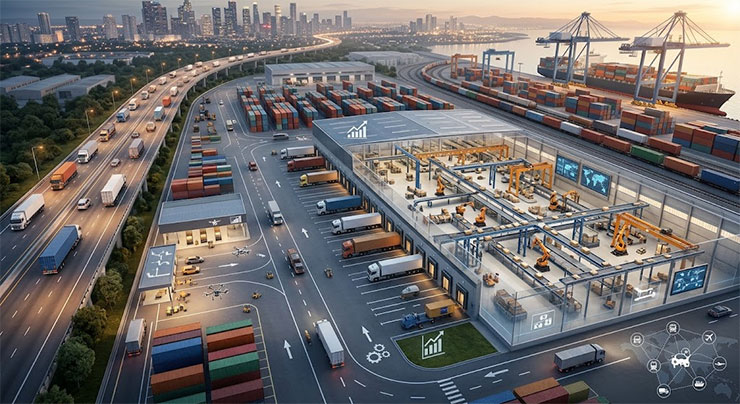
Logistics and supply chain management play an important role in the success of modern businesses. From sourcing raw materials and managing inventory to delivering finished products to customers, every stage requires careful coordination. As businesses expand their operations and serve customers across different locations, an organized logistics system becomes increasingly important. Efficient transportation, accurate inventory records, and reliable communication can help companies manage daily activities while responding to changing customer expectations.
The growth of e-commerce, international trade, and digital business operations has also increased the need for flexible delivery and distribution solutions. Businesses must consider transportation options, shipping costs, delivery schedules, and the movement of goods between suppliers, warehouses, and customers. Logistics providers such as RR Express, a company with experience in domestic distribution, delivery, and freight solutions, operate within this broader business environment. Understanding how logistics works can help organizations make informed decisions, improve operational planning, and develop supply chains that support sustainable growth.
Understanding Logistics and Supply Chain Management
Logistics and supply chain management are closely connected, but they have different areas of focus. Logistics generally refers to the movement, storage, and handling of goods. It includes transportation planning, warehousing, order fulfillment, and the coordination required to move products from one location to another.
Supply chain management covers a broader network of activities. It involves coordinating suppliers, manufacturers, distributors, logistics providers, retailers, and customers. The objective is to ensure that materials and products move through the network in a way that supports business requirements.
For example, a clothing retailer may purchase products from manufacturers, store them in a warehouse, distribute them to retail outlets, and ship online orders directly to customers. Logistics supports the physical movement of those products, while supply chain management coordinates the relationships, information, inventory, and planning decisions that make the entire process possible.
When these functions work together, businesses can develop a clearer understanding of their inventory, transportation requirements, and customer demand. This coordination can also help identify operational problems before they significantly affect daily activities.
Why Logistics Efficiency Matters for Businesses
Logistics efficiency influences several aspects of business performance, including costs, customer satisfaction, inventory management, and the ability to expand into new markets. Businesses that understand these connections can make more practical decisions about transportation, distribution, and order fulfillment.
Managing Operational Costs
Transportation, storage, packaging, labor, and inventory handling can account for a considerable portion of operating expenses. Poor planning may lead to unnecessary trips, inefficient use of vehicle capacity, excessive storage costs, or repeated handling of the same products.
Businesses can review their transportation routes, shipment volumes, delivery frequency, and warehouse processes to identify opportunities for improvement. Consolidating compatible shipments, planning deliveries in advance, and selecting suitable transportation methods may help reduce avoidable expenses.
However, the lowest transportation price is not always the most economical option. A delivery arrangement should also be evaluated according to its suitability, handling requirements, transit time, and potential impact on the customer’s experience.
Improving Customer Satisfaction
Customers generally expect accurate order information, reasonable delivery times, and clear communication when purchasing products. Delays, incorrect shipments, and limited tracking information can create frustration and reduce confidence in a business.
An organized logistics process helps businesses establish realistic delivery expectations and communicate relevant updates. It also makes it easier to investigate problems when a shipment is delayed or an order arrives with missing items.
Customer satisfaction depends on more than transportation alone. Accurate product information, inventory availability, order processing, packaging, and after-sales support also influence the overall experience. Logistics should therefore be managed as part of a broader customer service strategy.
Supporting Business Expansion
As companies enter new cities or countries, their logistics requirements become more complex. They may need additional warehouses, different transportation partners, customs documentation, or new distribution arrangements.
A flexible logistics strategy allows businesses to evaluate these requirements before entering unfamiliar markets. Companies can examine expected shipment volumes, delivery destinations, product characteristics, and local regulations to determine which arrangements are appropriate.
Working with established logistics providers may also help businesses understand available domestic and international shipping options. The most suitable approach will depend on the company’s operational scale, budget, products, and target markets.
The Role of Transportation in Modern Supply Chains
Transportation connects the different stages of a supply chain. Raw materials must reach production facilities, finished products need to move to warehouses or retailers, and customer orders must reach their intended destinations.
The choice of transportation method depends on several factors, including distance, shipment size, urgency, product value, and handling requirements. Businesses should evaluate these factors together rather than selecting a method based on speed or cost alone.
Road Transportation and Trucking
Road transportation is widely used for domestic distribution, regional deliveries, and the movement of goods between warehouses, distribution centers, ports, and airports. Trucks can serve a variety of destinations and are often important for the first and final stages of a shipment’s journey.
For businesses distributing goods across multiple locations, trucking arrangements may need to account for vehicle capacity, delivery sequences, road conditions, and loading requirements.
Careful route planning can help reduce unnecessary travel and improve the use of available transportation resources. Businesses should also consider access restrictions, delivery windows, and the type of vehicle needed for particular goods.
Air Freight for Time-Sensitive Shipments
Air freight can be appropriate when goods need to travel over long distances within a relatively short period. It is often considered for high-value products, urgent commercial shipments, and certain goods with specific transportation requirements.
Nevertheless, air transportation may involve higher costs than other options. Weight, dimensions, handling requirements, airport procedures, and additional charges can affect the total shipping expense.
Companies should compare the urgency of a shipment with its financial and operational importance. For non-urgent goods, another transportation method may provide a more suitable balance between cost and transit time.
Sea Freight for International Cargo
Sea freight is commonly used for international shipments involving substantial cargo volumes. It can be suitable for products that do not require the faster transit associated with air transportation.
Businesses must consider vessel schedules, port handling, customs clearance, container availability, and the movement of cargo between ports and final destinations. These stages can influence the overall time required for a shipment to reach its recipient.
Sea freight planning also requires attention to documentation and shipment preparation. Accurate descriptions of goods, appropriate packaging, and compliance with applicable regulations help support the transportation process.
Combining Different Transportation Methods
Some supply chains use several transportation methods within a single shipment journey. For instance, goods may travel by truck to a port, by sea to another country, and by road to a distribution center.
This approach can provide flexibility, but it also introduces coordination requirements. Businesses need to understand transfer points, schedules, documentation, and the responsibilities of each party involved.
Choosing between road, air, sea, or combined transportation depends on the specific shipment. A well-planned decision considers the entire journey rather than focusing on one segment in isolation.
Logistics and the Growth of E-Commerce
E-commerce has changed how businesses receive orders, manage inventory, and deliver products. Traditional retail operations often distribute large quantities of goods to stores, whereas online businesses may need to process many individual orders for customers in different locations.
This shift creates additional requirements for inventory accuracy, order preparation, packaging, dispatch, and returns management. A small delay or inventory error can affect multiple orders, particularly during promotional campaigns or seasonal demand peaks.
Order Fulfillment and Inventory Accuracy
Order fulfillment begins when an order is received and continues through picking, packing, dispatch, and delivery. Each stage depends on accurate information and consistent procedures.
If inventory records do not match actual stock levels, a business may accept orders for products that are unavailable. This can lead to cancellations, refunds, and customer complaints.
Businesses can improve inventory management by conducting regular stock checks, establishing clear receiving procedures, and maintaining consistent records across sales channels. Connecting inventory systems with order management tools may also reduce manual data entry and improve visibility.
Managing Delivery Expectations
Delivery expectations vary according to the product, customer location, shipping method, and service arrangement. Businesses should avoid promising delivery times that they cannot reasonably support.
Providing estimated delivery windows and communicating changes when they occur can help customers plan accordingly. Where available, shipment tracking can provide additional visibility into the movement of an order.
Companies should also prepare procedures for failed deliveries, incorrect addresses, damaged packages, and customer requests to change delivery details. A defined process helps employees respond consistently and reduces confusion.
Handling Returns and Reverse Logistics
Returns are an important part of e-commerce operations. Customers may return products because of sizing issues, damage, incorrect orders, or a change of preference.
Reverse logistics covers the movement of products from customers back to businesses or designated processing locations. It may include collection, inspection, restocking, repair, recycling, or disposal.
An effective returns process should establish eligibility rules, documentation requirements, inspection procedures, and communication responsibilities. Businesses that manage returns carefully can improve inventory accuracy while reducing unnecessary processing delays.
Choosing a Suitable Logistics Service Provider
Logistics providers can support businesses with transportation, courier deliveries, freight coordination, and distribution activities. Selecting an appropriate provider requires an understanding of the company’s actual shipping needs and the operating conditions of its supply chain.
Rather than relying on broad claims or promotional promises, businesses should assess practical considerations that affect daily operations.
Evaluating Service Coverage
The first consideration is whether a provider can support the required destinations and transportation arrangements. A business delivering within one city may have different needs from a company shipping products across several countries.
Companies should clarify the locations served, the types of shipments accepted, and whether domestic and international transportation options are available. For cross-border shipments, they should also understand which party coordinates customs-related procedures and supporting documentation.
RR Express is a logistics and courier service company founded in 2013, with more than 15 years of experience in domestic distribution, delivery, and freight solutions, according to its company profile. It serves customers across Singapore, Australia, the United Kingdom, and Southeast Asia, and works with established retailers as well as major third-party logistics, air cargo, and sea freight companies. Its activities are part of the wider logistics landscape supporting local and international shipments.
When reviewing any provider, businesses should verify that the available services and destination coverage match their particular requirements.
Reviewing Communication and Shipment Visibility
Clear communication is important throughout the shipping process. Businesses need to know how to submit shipment information, obtain status updates, report problems, and resolve delivery-related questions.
Before entering an arrangement, companies can ask about tracking availability, customer support channels, reporting procedures, and the process for handling delays or damaged goods.
The level of visibility required will depend on the shipment. High-value or time-sensitive cargo may require more frequent updates and more detailed coordination than routine deliveries.
Understanding Pricing and Additional Charges
Shipping costs may include transportation fees, fuel-related charges, handling, packaging, storage, customs duties, taxes, and other applicable expenses. The final amount can differ depending on shipment weight, dimensions, route, service type, and delivery requirements.
Businesses should request clear pricing information and identify which services are included in a quotation. For international shipments, they should also clarify responsibility for duties, taxes, and customs-related costs.
Comparing providers on a consistent basis makes it easier to understand the overall cost of each arrangement. A low initial quotation may not represent the lowest total cost if additional services or handling charges are required later.
Assessing Reliability and Contingency Planning
Businesses should examine how a provider manages operational disruptions, including weather events, transportation delays, capacity limitations, and documentation problems.
No logistics arrangement can eliminate every possible disruption. However, clear escalation procedures, alternative transportation options, and realistic communication practices can help companies respond when difficulties occur.
Businesses can also review service records, contractual terms, insurance provisions, and shipment-handling procedures where relevant. These details provide a more practical basis for evaluating a potential logistics relationship than relying on general assurances alone.
The Importance of Technology in Logistics Management
Digital technology has become an important part of modern logistics. Businesses increasingly use software to coordinate orders, maintain inventory records, monitor shipments, and analyze operational performance.
Technology can improve the availability of information, but its effectiveness depends on data quality, system integration, and how employees use the available tools.
Transportation Management Systems
A transportation management system helps businesses organize shipping activities, compare transportation options, plan routes, and manage freight-related information.
Depending on its features, the system may support shipment booking, carrier coordination, delivery documentation, and cost analysis. These capabilities can reduce reliance on disconnected spreadsheets and manual processes.
Businesses should choose systems that match their scale and operational complexity. A smaller company may need only a straightforward shipping workflow, while a larger operation may require more advanced integration with warehouse and order management systems.
Warehouse Management Systems
Warehouse management systems help organize activities such as receiving goods, assigning storage locations, picking orders, packing products, and recording stock movements.
Clear warehouse procedures reduce the risk of misplaced inventory and inconsistent records. When warehouse information is connected with sales and order systems, employees can gain a more accurate view of product availability.
Implementation requires careful planning. Staff training, reliable data, and clearly defined responsibilities are necessary to ensure that digital tools support rather than complicate daily work.
Data Analysis and Performance Measurement
Logistics data can help businesses identify patterns and evaluate operational performance. Useful indicators may include delivery lead times, shipping costs per order, order accuracy, inventory turnover, and the frequency of delivery exceptions.
These measurements should be interpreted in context. For example, a reduction in shipping costs may be less beneficial if it causes a significant increase in delivery delays or product damage.
Regular reviews allow businesses to identify recurring problems and determine whether process changes are producing the intended results. Over time, this approach can support more informed decisions about inventory, transportation, and distribution planning.
Common Logistics Challenges and Practical Solutions
Even well-organized supply chains face challenges. Demand fluctuations, supplier delays, inaccurate records, transportation disruptions, and regulatory changes can affect the movement of goods.
Understanding common risks helps businesses develop realistic plans instead of responding to every problem as an isolated event.
Demand Fluctuations and Inventory Problems
Demand may change because of seasonal patterns, promotions, market conditions, or unexpected customer behavior. Businesses that underestimate demand may run out of stock, while excessive purchasing can increase storage costs and tie up working capital.
Companies can address these risks by reviewing historical sales data, monitoring current orders, and maintaining appropriate inventory thresholds. Forecasts should be updated when market conditions change rather than treated as fixed predictions.
Coordination between purchasing, sales, warehouse, and logistics teams is equally important. Sharing information helps businesses adjust stock levels and shipping plans before problems become more difficult to manage.
International Shipping and Customs Documentation
Cross-border shipping involves requirements that may differ according to the destination, product category, and transportation method. Missing or inconsistent documents can delay clearance and create additional expenses.
Businesses should confirm the documentation required for their particular shipments, including commercial invoices, packing lists, permits, and other applicable records. Product descriptions, quantities, declared values, and destination details should be accurate and consistent.
Companies should also consider import restrictions, export controls, duties, taxes, and product-specific regulations. When necessary, they can consult qualified customs professionals or relevant authorities to clarify requirements.
Disruptions and Risk Management
Supply chain disruptions can result from severe weather, port congestion, infrastructure problems, supplier difficulties, or sudden changes in transportation capacity.
Businesses can reduce their exposure by identifying critical suppliers, reviewing alternative shipping routes, and determining which inventory items require additional protection. Contingency plans should specify who makes decisions, how information is shared, and which alternatives are available.
Risk management should remain proportionate to the business. Not every shipment requires multiple backup arrangements, but products that are essential to business continuity may justify additional planning.
Building a More Sustainable Logistics Strategy
Sustainability is becoming an important consideration in transportation and distribution. The movement of goods consumes energy and may contribute to greenhouse gas emissions, packaging waste, and other environmental impacts.
Businesses can evaluate these effects while considering cost, operational feasibility, and customer requirements.
Practical measures include improving route planning, consolidating compatible shipments, reducing unnecessary packaging, and selecting appropriately sized vehicles. Better inventory planning can also help limit emergency shipments and avoidable product waste.
Where operationally suitable, businesses may evaluate transportation options with lower environmental impacts. However, the benefits of each measure depend on shipment characteristics, route conditions, available infrastructure, and actual operating practices.
Sustainability should be considered alongside service quality and financial performance. Setting measurable goals and reviewing progress can help companies identify realistic improvements without making unsupported environmental claims.
Conclusion
Efficient logistics and supply chain management are essential to businesses that need to control operating costs, maintain inventory accuracy, deliver orders, and serve customers across different markets. Transportation planning, warehouse coordination, digital systems, and effective communication all contribute to the movement of goods. By understanding the relationship between these activities, businesses can identify weaknesses, improve decision-making, and build processes that are better prepared for changing demand and operational challenges.
Developing an effective logistics strategy requires ongoing evaluation rather than a single decision. Businesses should assess their shipping requirements, compare suitable transportation options, understand pricing and documentation, and establish procedures for managing disruptions. Logistics providers such as RR Express form part of the broader network supporting domestic distribution, courier services, freight, and international shipping. With realistic planning and clear operational priorities, companies can develop supply chains that support business continuity, customer expectations, and long-term growth.